

 Join
Join
Rett Syndrome: 7 Important Facts


Key Takeaways
- Rett syndrome is a rare disorder that affects brain development, almost always occurring in females, and is caused by a genetic mutation in the MECP2 gene located on the X chromosome. View all takeaways
Families who learn their child has Rett syndrome may feel lost or worried about the future. As children grow, it can be hard to know what to expect next, but families don’t have to face the journey alone.
This article covers seven important facts about Rett syndrome, including diagnosis, the stages of the condition, treatment approaches, and the types of clinicians who can provide support.
1. Rett Syndrome Is a Rare Condition
Rett syndrome is a rare disorder that affects brain development. It almost always occurs in females, according to the journal Frontiers in Sleep. In the United States, Rett syndrome affects about 1 in 10,000 to 15,000 live female births. Very few cases are inherited from parents, so doctors usually can’t predict who will develop Rett syndrome.
Rett syndrome is caused by a genetic mutation (change) in the MECP2 gene, which helps control how other genes work and supports normal development. This gene is located on the X chromosome.
Girls typically have two X chromosomes, so if one copy of the MECP2 gene is affected, the other may still work normally. Boys typically have only one X chromosome, so symptoms are often more severe. Many boys with MECP2 mutations do not survive before birth or during early infancy.
2. Signs and Symptoms Often Appear in the First Year of Life
Children with Rett syndrome are usually born without complications during pregnancy or delivery. Babies often grow and learn normally for the first six months before signs and symptoms of Rett syndrome begin to appear. These early changes can vary from child to child and may be hard to notice at first.
Parents may notice that after about 6 months of life, their child:
- Interacts or communicates less, making less eye contact
- Shows less interest in toys or people
- Has microcephaly (a smaller-than-expected head size)
- Has low muscle tone (reduced muscle strength or tension)
- Seems more irritable than usual
- Loses skills they had already learned
- Has trouble learning new skills, like crawling
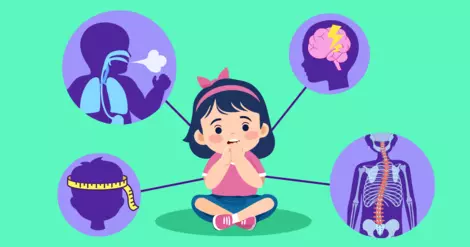
More obvious symptoms usually appear between 12 and 18 months of age. One classic sign is repetitive hand movements, such as rubbing and squeezing, which often appear between ages 1 and 4.
As a child grows, parents may also notice other symptoms, including:
- Apraxia (difficulty coordinating muscles needed for speech)
- Dystonia (repetitive, uncontrolled muscle movements)
- Spasticity (muscle stiffness or tightness)
- Scoliosis (a side-to-side curve of the spine)
- Sleep issues, like trouble staying asleep
- Breathing problems, such as breath-holding or rapid breathing
- Swallowing problems that affect eating or drinking
- Digestive problems, such as constipation
- Anxiety or panic episodes
- Poor growth or weight gain
- Seizures (bursts of abnormal brain activity that can cause uncontrolled movements or changes in behavior)
3. Rett Syndrome Progresses in Stages
Most children with Rett syndrome develop signs and symptoms in stages:
- Stage 1 — Early onset between 6 and 18 months of age. Symptoms at this stage can be subtle, like showing less eye contact or delays in developmental skills.
- Stage 2 — Rapid deterioration, usually between ages 1 and 4. Children lose skills they previously had and begin to show symptoms such as slowed growth, coordination problems, repetitive hand movements, breathing issues, irritability, and reduced communication.
- Stage 3 — The plateau stage between ages 2 and 10, with symptoms becoming more stable or slightly improving. However, seizures can start in this stage.
- Stage 4 — Late motor deterioration, which typically begins after age 10. Children and teens may develop more movement problems, including muscle weakness, scoliosis, and reduced joint mobility due to muscle tightening.
Rett syndrome doesn’t progress the same way in every child. For example, seizures may come and go over time. Some children may not fully plateau during stage 3 and may continue to gradually worsen.
4. Diagnosis Includes Genetic Testing
Because Rett syndrome is rare and difficult to predict, it’s not always diagnosed right away. Doctors may first test for other conditions that can cause similar symptoms, like autism, hearing or vision problems, or brain injury before birth. Tests to rule out other conditions may include:
- Urine tests
- Blood tests
- Imaging tests, like MRI or CT scans
- Eye and vision tests
- Electroencephalograms (brain activity tests)
Once a child shows key symptoms — like repetitive hand movements, trouble walking, trouble using their hands, or loss of communication skills — the doctor may order a genetic test to help confirm Rett syndrome. This test involves drawing a blood sample and analyzing the DNA for a mutation in the MECP2 gene.
5. There Are Other Forms of Rett Syndrome
Some children have atypical Rett syndrome, in which symptoms may appear milder or more severe or start earlier or later than usual. Atypical Rett syndrome accounts for up to one-third of Rett syndrome cases and affects 1 in 45,000 children, mostly girls, according to Orphanet.
There are several forms of atypical Rett syndrome, including:
- Congenital Rett syndrome (Rolando variant) — One of the most severe forms, with symptoms appearing in the first few months of life
- Early-onset Rett syndrome (Hanefeld variant) — A form in which seizures start in the first months of life
- Late-childhood Rett syndrome — A form in which head size may remain normal, and symptoms appear later in childhood rather than during infancy
- Forme fruste Rett syndrome — A milder form in which symptoms may not meet all the usual diagnostic criteria
- Preserved-speech variant of Rett syndrome (Zappella variant) — A form in which children retain some speech skills and may regain certain language and hand skills
6. Treating Rett Syndrome Takes a Team
There’s no cure for Rett syndrome, but treatments can help manage symptoms throughout life. Research suggests that regular support from healthcare providers may help improve movement and communication skills for some children.
Each treatment plan is tailored to the child’s needs and may involve several healthcare professionals, depending on the symptoms and their severity. Treatment may include:
- Regular medical checkups and referrals — Multiple specialists may be involved to manage health issues, including digestive, heart, and orthopedic (bone and muscle) problems.
- Medication — Trofinetide (Daybue), the first and only medication approved to treat Rett syndrome, can be used for adults and children ages 2 and older. Other medications may help manage symptoms such as seizures, sleep issues, anxiety, or muscle tightness.
- Physical therapy — Physical therapists may teach caregivers stretches and exercises that can help boost flexibility and movement skills, like sitting or walking. They may also recommend braces, casts, or assistive devices.
- Occupational therapy — Occupational therapists also work on movement and assistive devices but often focus on hand skills and daily activities such as self-care. They may also help children learn strategies for managing emotions and frustration.
- Speech-language therapy — A speech-language therapist can help improve communication, through either spoken language or alternative methods.
- Nutrition services — Children or adults who have trouble eating due to swallowing difficulties may need other strategies, such as a feeding tube, to get enough nutrients.
- General support services — School programs and job-training services can help children, teens, and adults participate in school, work, and community life.
Some children may also benefit from complementary therapies that support their main treatment plan. Although there’s less evidence for these approaches, some families may find them to be helpful.
Two therapies that have some supportive research are music therapy and hydrotherapy. Music therapy may help boost hand coordination, communication skills, and self-esteem. Exercises and stretches performed in water may help improve movement, balance, and behavior.
7. Support Is Available for Caregivers
Caring for someone with Rett syndrome can be challenging and affect work schedules, daily errands, and opportunities to socialize or relax. If a child or adult with Rett syndrome needs a lot of help with dressing, bathing, and other everyday activities, caregiving can also become physically demanding.
Support is available. Caregivers who are unsure where to turn can talk with their doctor about community resources that may help prevent caregiver burnout. Healthcare teams may also connect caregivers with social workers who can offer guidance and teach coping strategies.
Join the Conversation
On MyRettTeam, people share their experiences with Rett syndrome, get advice, and find support from others who understand.
What other facts do you know about Rett syndrome? Let others know in the comments below.
- What Is Rett Syndrome? — Children’s Hospital of Philadelphia
- Rett Syndrome: A Review of Clinical Manifestations and Therapeutic Approaches — Frontiers in Sleep
- Rett Syndrome — Mayo Clinic
- Muscle Tone Physiology and Abnormalities — Toxins
- Seizure — Cleveland Clinic
- Rett Syndrome — Boston Children’s Hospital
- Atypical Rett Syndrome — Orphanet
- Rehabilitation Interventions in Rett Syndrome: A Scoping Review — Developmental Medicine & Child Neurology
- Occupational Therapy — Nemours KidsHealth
- Rett Syndrome — StatPearls
- Evidence-Based Physical Therapy for Individuals With Rett Syndrome: A Systematic Review — Brain Sciences
- How To Cope When Your Child Has Rett Syndrome — Northwest Rett Syndrome Association
Related
- What are conditions related to Rett syndrome? See answer
- Why do sleep problems happen with Rett syndrome? See answer
- What are the current medications and treatments for Rett syndrome? See answer
- When is surgery needed for Rett syndrome? See answer






 Your Privacy Choices